Open to Opportunities

Backend &Systems Engineer

Final year CS @ NIT Kurukshetra. I work on high-performance systems — custom memory allocators, distributed databases, and ML pipelines built from scratch. Published researcher (Springer & IEEE). LeetCode Knight.

Illustration of a developer workstation with code and cloud icons

About Me

Where low-level meets large-scale

Hello, I'mSatyam Kesharwani

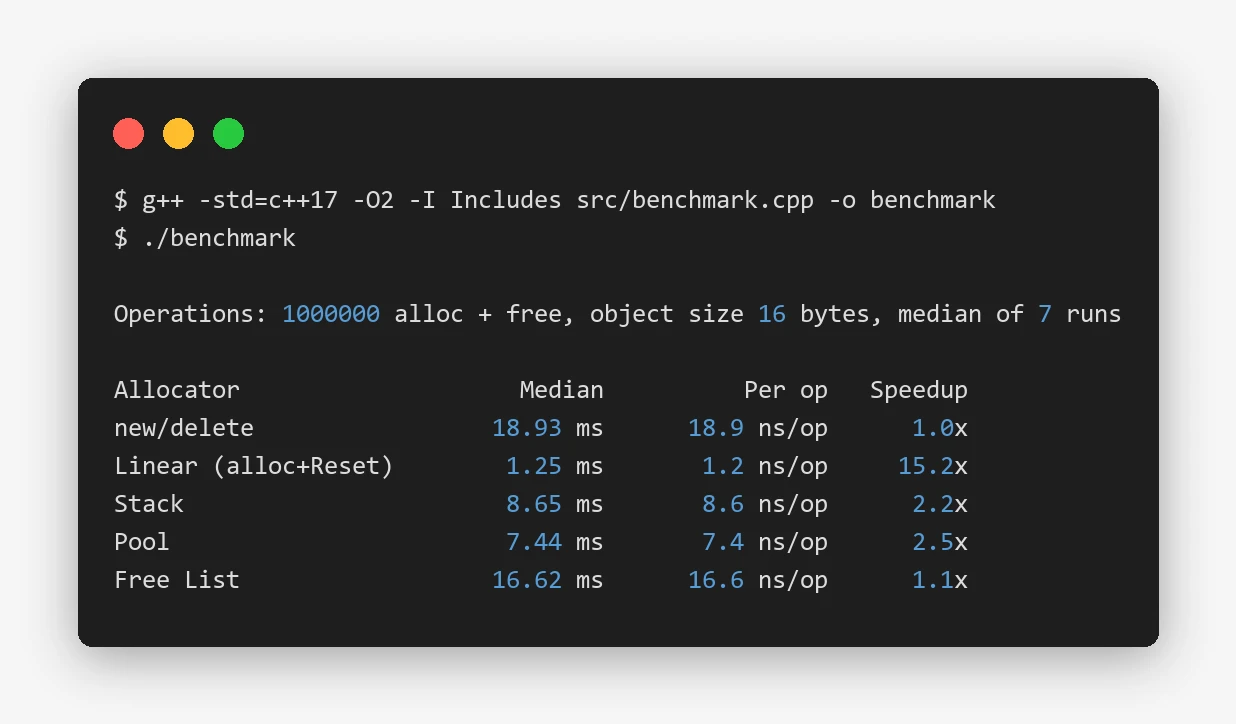
Final year Computer Engineering student at NIT Kurukshetra. I enjoy building systems from scratch — AtomicKV, a distributed key-value database I built in C++, uses a custom B-Tree storage engine, Gossip Protocol, and Linux epoll to handle 10,000+ req/sec on a single thread. I've also written four custom memory allocators and an order-matching engine that uses them, with a pool allocator about 2.5x faster than glibc's new/delete. On the research side, I've published two papers — one on ransomware detection using Vision Transformers (ICDAM 2025, Springer) and another on TinyML-based battery diagnostics (IEEE NE-IECCE 2026). Selected for Amazon ML Summer School 2025. LeetCode Knight (1908).

"I don't just use systems — I build them from scratch."
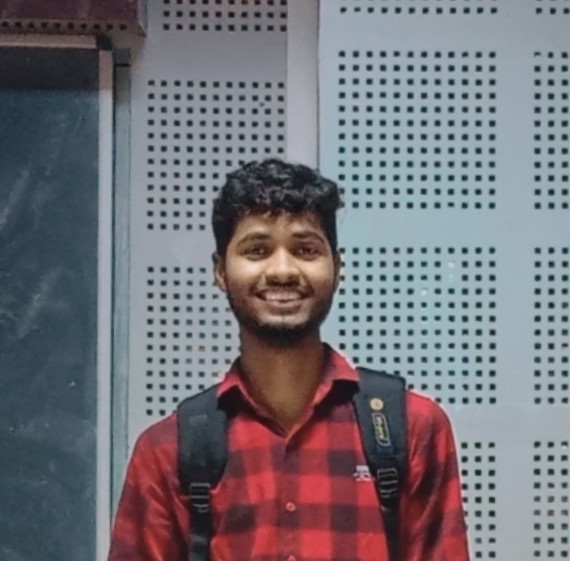
Satyam Kesharwani
5+

Major Projects

Production-grade systems in C++, Python & Node.js

2

Research Papers

Published at ICDAM 2025 (Springer) & IEEE NE-IECCE 2026

660+

DSA Problems

LeetCode Knight (1908)

LeetCode Stats & Contest Rating

stym01's LeetCode Stats

Contest Rating History

Loading contest data...

Portfolio Showcase

Explore my journey through projects, achievements, and technical expertise.

Low-Level & Core Systems

AtomicKV: Distributed Key-Value Database

AtomicKV: Distributed Key-Value Database

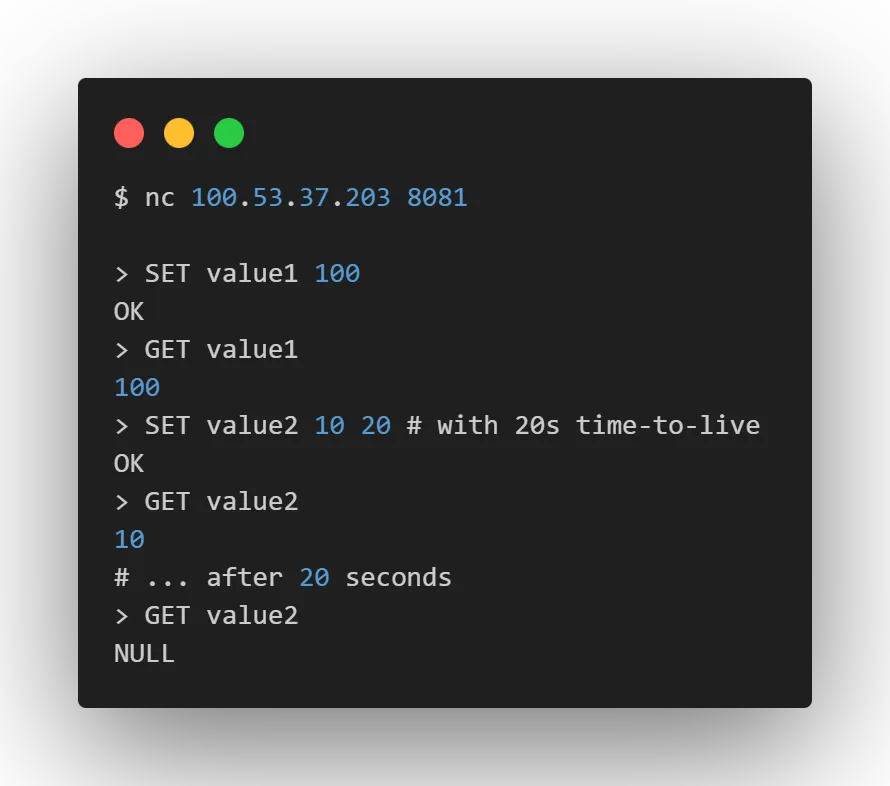
Architected a production-grade, distributed key-value database from scratch. By leveraging a single-threaded asynchronous event loop (epoll), a tiered storage engine (LRU Cache + Custom B-Tree), asynchronous background replication, and a masterless Gossip Protocol architecture, the system achieves massive concurrency, horizontal scalability, and high availability.
Custom Allocators & Order Matching Engine

Custom Allocators & Order Matching Engine

Four memory allocators (Linear, Stack, Pool and Free-List) written from scratch in C++, and a limit-order-book matching engine that uses them so the matching path never calls new or malloc.

Backend & Distributed Systems

Shortify: High-Throughput URL Shortening Engine

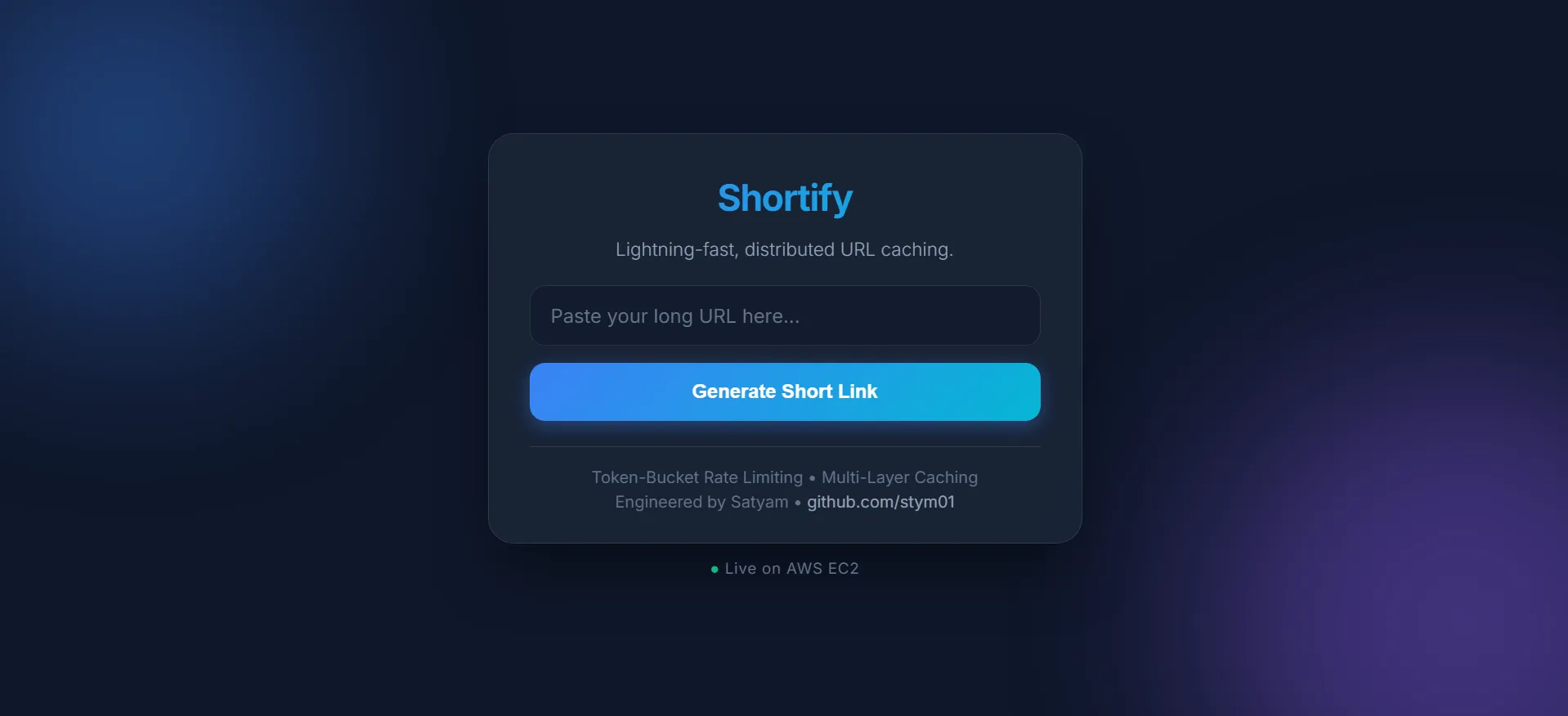
Shortify: High-Throughput URL Shortening Engine

Built a highly scalable URL shortening service utilizing multi-layer caching and a PostgreSQL database for persistent storage.

Machine Learning & Applied AI

RansomDroid: Android Ransomware Detection

RansomDroid: Android Ransomware Detection

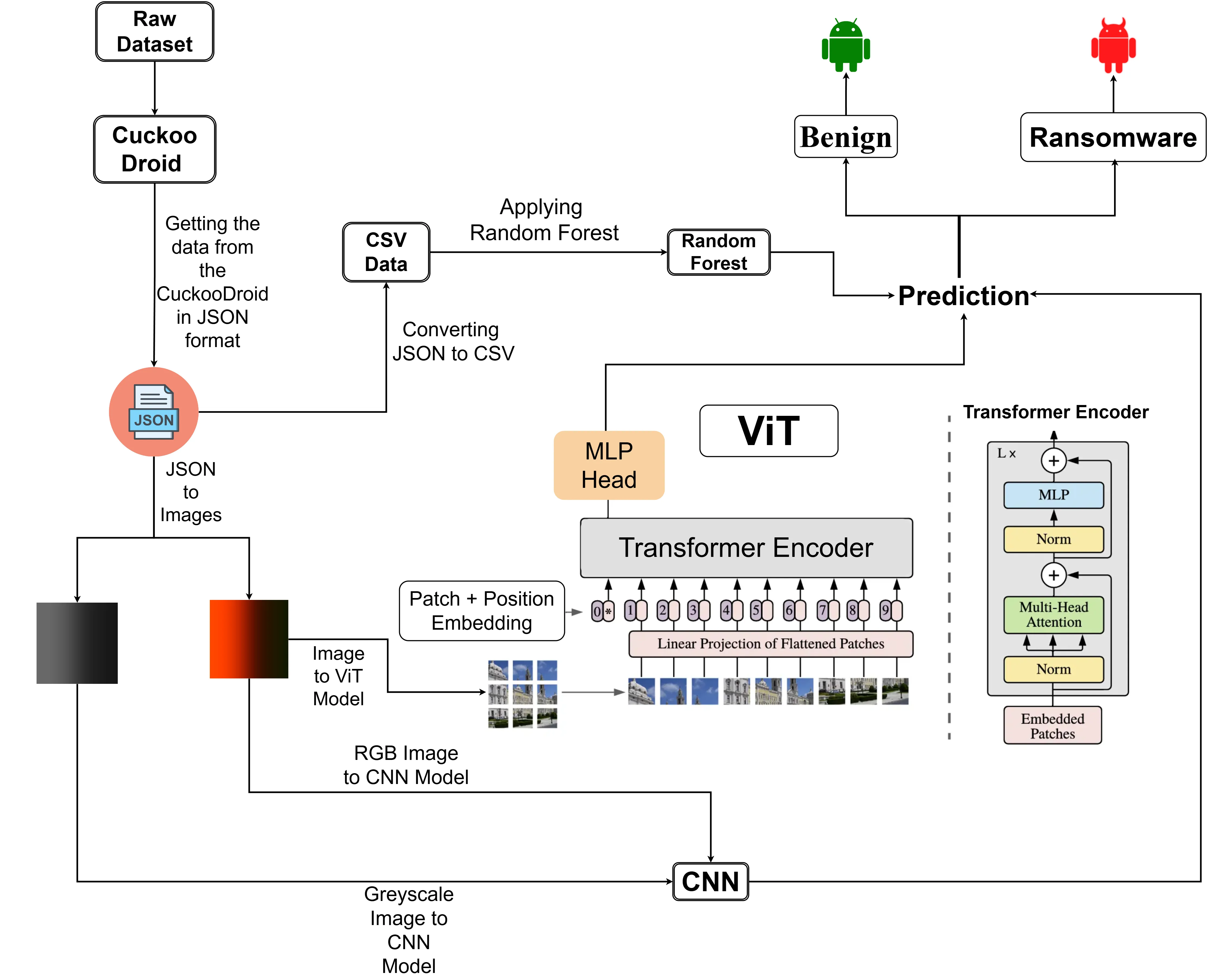
Researched and developed a novel deep learning approach for Android ransomware detection, achieving 99.78% accuracy using a Vision Transformer (ViT) and dynamic behavioral analysis.

SOC and SOH Estimation of Lead-Acid Battery

SOC and SOH Estimation of Lead-Acid Battery

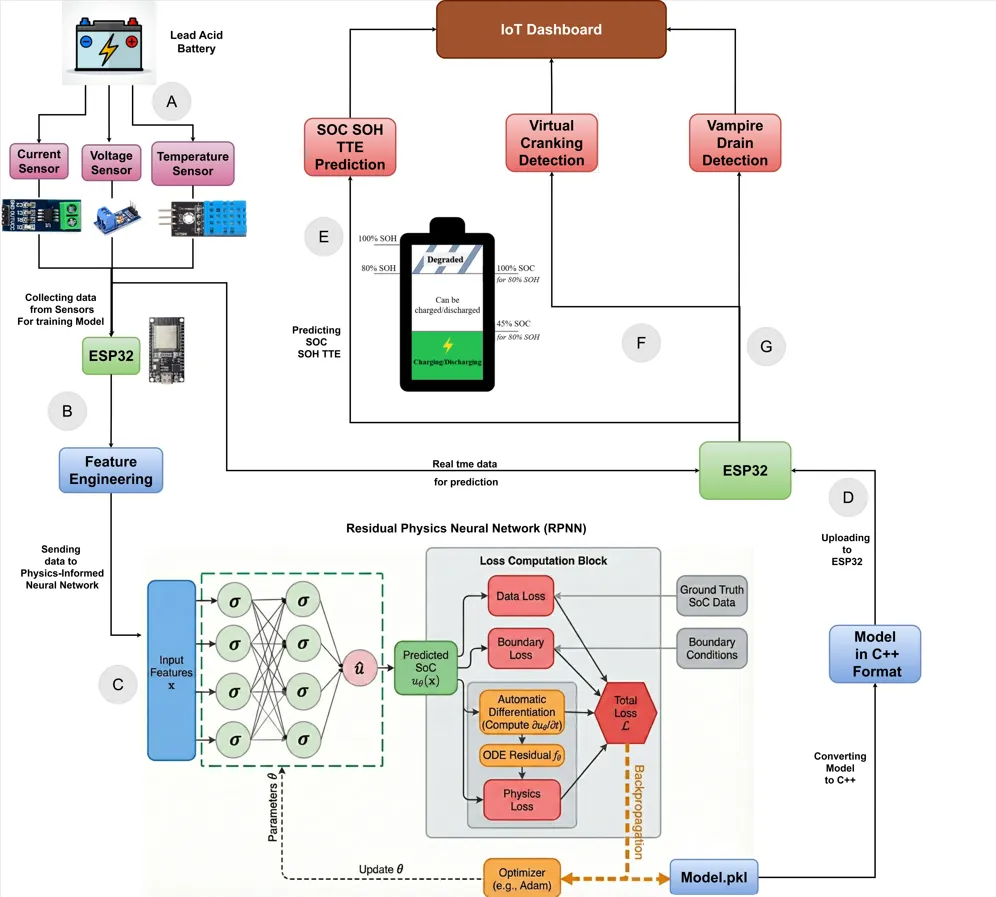
Proposed a low-cost, fully offline IoT-based TinyML system on an ESP32 microcontroller. Deployed a novel Residual-Physics Neural Network (RPNN) to predict battery SOC, SOH, and Time-to-Empty, while introducing Virtual Cranking and Vampire Drain detection — achieving R² = 99.70% with MAE of 0.6815.

Experience

My professional journey in building scalable systems and models.

Software Engineer Intern

Ministry of Defence–sponsored project · NIT Kurukshetra

Jan 2026 - Present

Kurukshetra, India

  • Sole student developer on an MoD-sponsored security project under faculty supervision; built a security analysis suite of 46 interconnected modules to detect and mitigate threat vectors, following secure-coding practices.
  • Processed and analyzed high-volume system logs (Firewall, Antivirus, DNS, and Windows event logs) to model user-behavior patterns and flag suspicious activity.
  • Applied software development lifecycle (SDLC) methodologies to deliver the software, focused on system-level threat detection.
Technologies Applied:
Networking & SecurityLog AnalysisSDLCThreat Detection

Machine Learning Research Intern

National Institute of Technology Kurukshetra

Jun. 2024 - Dec. 2024

Kurukshetra, India

View Repository
Published at ICDAM 2025 (Springer LNNS, London)
  • Pioneering ViT Application: To the best of our knowledge, first to employ a Vision Transformer exclusively for Android ransomware detection. Fine-tuned a pretrained ViT via grid search (lr=0.001, batch=64, no weight decay) to achieve 99.78% accuracy, 99.76% precision, 99.76% recall, and 99.76% F1-score.
  • Dynamic Analysis Pipeline: Executed dynamic analysis on 4,280 APKs (2,280 ransomware from RansomProber + 2,000 benign from Androzoo) through the CuckooDroid sandbox, generating comprehensive behavioral JSON reports capturing system calls, network activity, and file operations.
  • Novel Data Transformation: Introduced a first-of-its-kind transformation of CuckooDroid JSON reports into both RGB and grayscale images (224×224 px), enabling deep learning models to detect subtle spatial and structural ransomware patterns invisible in tabular data.
  • Feature Engineering: Extracted 9 behavioral features — flagged files, hidden payloads, dangerous permissions, antivirus engine detections (>10), triggered signatures, total signature severity, and VirusTotal positives — for structured ML analysis.
  • Comparative Evaluation: Benchmarked ViT against CNN on RGB (99.76%), CNN on grayscale (99.53%), and Random Forest on CSV (99.41%), with the ViT scoring highest.
Technologies Applied:
PythonVision Transformer (ViT)CNNRandom ForestDynamic AnalysisCuckooDroidFeature Engineering

IoT & Machine Learning Research Intern

National Institute of Technology Kurukshetra

Jan. 2025 - Present

Kurukshetra, India

View Repository
Published at NE-IECCE 2026 (IEEE) · second author
  • Novel RPNN Architecture: Engineered a Physics-Informed Neural Network with a custom loss function embedding Coulomb Counting differential equations (dSOC/dt) as a physics residual penalty, outperforming XGBoost (R² 98.46%), Random Forest (R² 98.45%), and Linear Regression (R² 73.57%).
  • Dataset & Sensor Pipeline: Collected 19,948 samples at 1 Hz over 5.5 hours from Voltage, ACS712 (current), and DHT11 (temperature) sensors during a controlled 12.5V→10.5V discharge cycle of a 12V 7Ah lead-acid battery.
  • TinyML Edge Deployment: Compressed the RPNN into an INT8-quantized C++ library via the Edge Optimized Neural (EON) Compiler and deployed it on the ESP32's flash memory, enabling fully offline inference with zero cloud dependency.
  • Virtual Cranking & Vampire Drain: Invented a real-time algorithm that calculates internal resistance (R₀) and simulates a 200A engine-start load to predict No-Crank failures. Implemented parasitic drain detection alerting users of abnormal quiescent current (>50mA) after engine-off.
  • Deep-Sleep & IoT Dashboard: Implemented a power-conservation algorithm where the ESP32 performs inference in <2 seconds then hibernates for 5 minutes, dropping power to micro-amps. Developed an Arduino IoT Cloud mobile dashboard for real-time SOC, SOH, TTE, and safety alerts.
Technologies Applied:
TinyMLESP32Physics-Informed Neural NetworksC++PythonPyTorchIoTArduino IoT Cloud

Education

B.Tech in Computer Engineering

National Institute of Technology (NIT) Kurukshetra

CGPA: 8.88 / 10

2023 - 2027

Kurukshetra, India

Publications

My academic research and contributions to international conferences.

From Behavior to Pixels: A Vision Transformer Approach for Android Ransomware Detection

Satyam Kesharwani (lead & corresponding author), Kamaldeep, Manisha Malik

ICDAM 2025 (London)
Springer LNNS
Published: 2025
Vision Transformer (ViT)CNNRansomware DetectionDynamic AnalysisPython

SOC and SOH Estimation of Lead-Acid Battery using IoT and Residual-Physics Neural Network

R. Malhotra, Satyam Kesharwani (second author), S. Sharma, S. Sah, M. Malik

NE-IECCE 2026
IEEE
Published: 2026
TinyMLIoTPhysics-Informed Neural NetworksC++ESP32

Engineering Blog

How I built these systems, with the code, the numbers and the bugs.

Contact Me

Whether you have a question, a project idea, or just want to connect, feel free to drop me a message. I'd love to hear from you.

Get In Touch

Reach out for collaborations, technical discussions, or professional opportunities.